

Satellites are multiplying faster than the rules
Why regulators are struggling to keep pace with megaconstellations
Satellites are multiplying faster than the rules
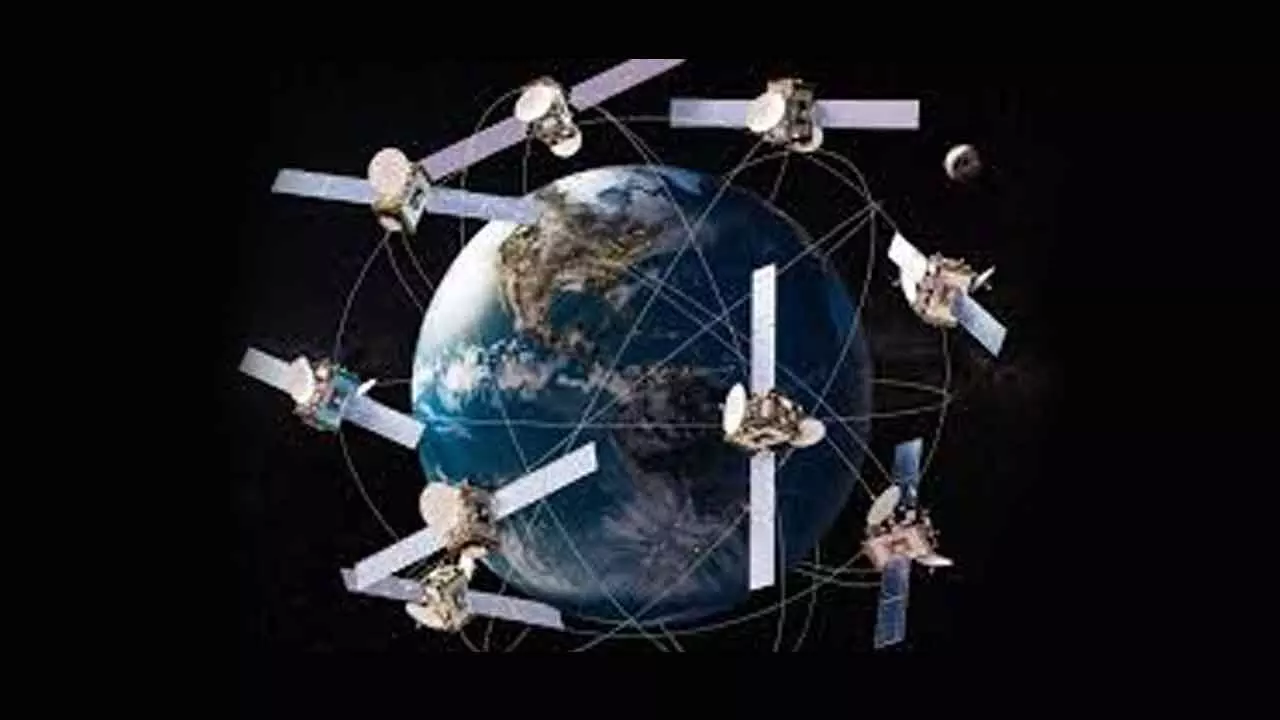
On January 30, 2026, SpaceX filed an application with the US Federal Communications Commission for a megaconstellation of up to one million satellites to power data centres in space.
The proposal envisions satellites operating between 500 and 2,000 kilometres in low Earth orbit. Some of the orbits are designed for near-constant exposure to sunlight. The public can currently submit comments on this proposal.
SpaceX's filing is just the latest among exponentially growing satellite megaconstellation proposals. Such satellites operate with a single purpose and have short replacement life cycles of about five years. As of February 2026, approximately 14,000 active satellites are in orbit.
An additional 1.23 million proposed satellite projects are in various stages of development. The approval process for these satellites focuses almost entirely on the limited technical info companies have to submit to regulators. Cultural, spiritual, and most environmental impacts aren't taken into account but they should be.
The night sky will drastically change
At this scale of growth, the night sky will change permanently and globally for generations to come. Satellites in low Earth orbit reflect sunlight for about two hours after sunset and before sunrise.
Despite engineering efforts to make them less bright, truck-sized satellites from many megaconstellations look like moving points in the night sky.
Projections show future satellites will significantly increase this light pollution. In 2021, astronomers estimated that in less than a decade, 1 in every 15 points of light in the night sky would be a moving satellite. That estimate only included the 65,000 megaconstellation satellites proposed at the time.
Once deployed at a scale of millions, the impacts on the night sky may not be easily reversed. While the average satellite only lasts about five years, companies design these megaconstellations for nearly continuous replacement and expansion.
This locks in a continuous, industrialised presence in the night sky. All this is causing a space-based "shifting baseline syndrome", where each new generation accepts a progressively more degraded night sky.
Criss-crossing satellites become the new normal. And for the first time in human history, this shifting baseline means kids today won't grow up with the same night sky every previous generation of humanity had access to.
Houston, we have a 'mega' problem
Concerns over the sheer volume of proposed satellites come from many sides. Scientific concerns include bright reflections and radio emissions from satellites that will disrupt astronomy. Industry experts also note traffic management and logistical concerns.
There's currently no form of unified space traffic management in the same way that exists in aviation, for example. Megaconstellations also increase the risk of Kessler syndrome, a runaway chain reaction of collisions.
There are already 50,000 pieces of debris in orbit that are ten centimetres or larger. If satellites stopped all collision avoidance manoeuvres, the latest data shows we can expect a major collision in 3.8 days. Major cultural concerns abound, too.
Satellite light pollution will negatively impact Indigenous uses of the night sky for longstanding oral traditions, navigation, hunting, and spiritual traditions. Launching so many satellites uses up vast amounts of fossil fuels, damaging the ozone layer.
After the satellites have served their purpose, the end-of-life plan is to burn them up in the atmosphere. This poses another environmental concern depositing vast quantities of metals into the stratosphere, causing ozone depletion and other potentially harmful chemical reactions. All this feeds into legal concerns.
Under international space law, countries not companies are liable for harm caused by their space objects. Space lawyers are increasingly trying to understand if international space law can actually hold corporations or private individuals accountable. This is especially important as the risk of damage, death or permanent environmental damage grows.
(The wrtier is a Senior Teaching Fellow at Bond University, Australia)





